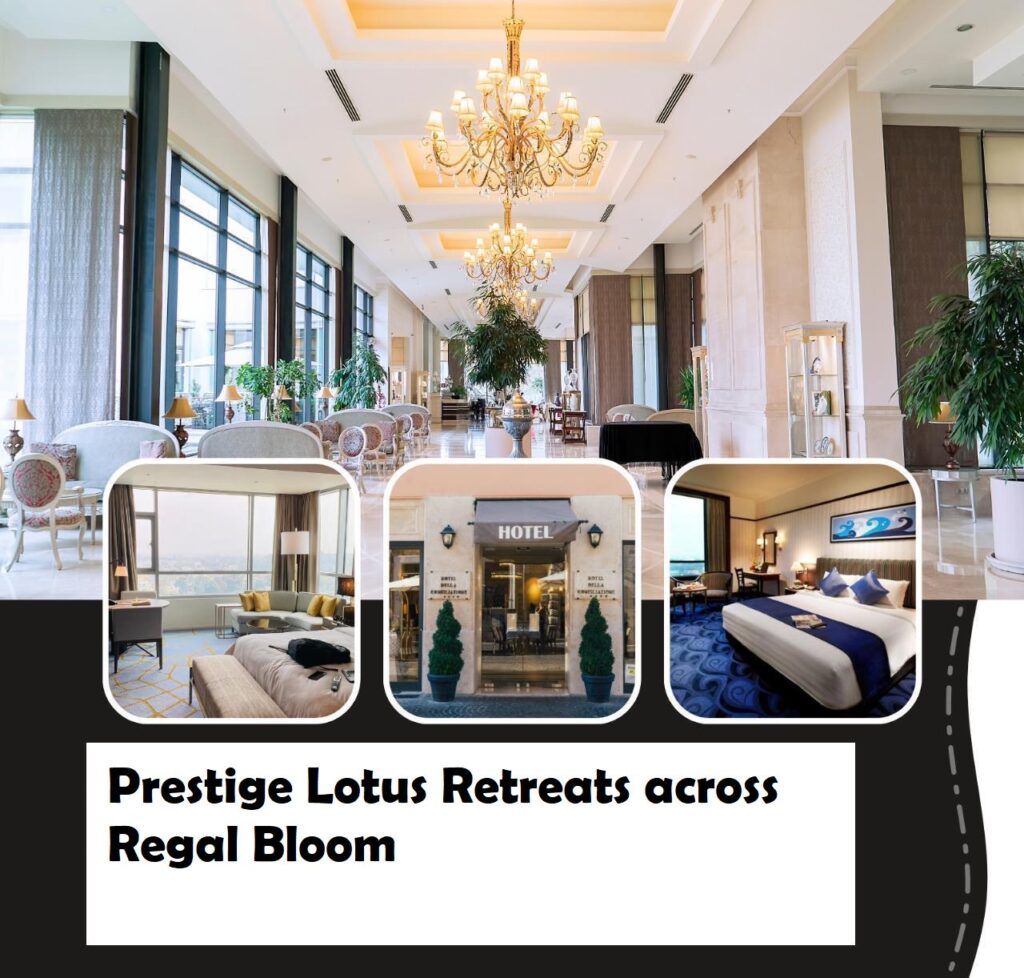
There’s a quiet magic in the phrase “Prestige Lotus Retreats across Regal Bloom.” It suggests sanctuaries where heritage whispers through carved wood, where lotus ponds mirror ember-tinted skies, and where every detail—linen thread count, tea temperature, the arc of a lantern’s glow—has been tuned to hush the mind into presence. Imagine a constellation of intimate hideaways scattered across serene valleys and palace-lined rivers, each one unfolding like a petal: measured, graceful, and fragrant with ritual. This is the promise—luxury not as display, but as ceremony; nature not as backdrop, but as co-host.
I. Lotus Courtyard Pavilions
Built around lily-studded courtyards, these pavilions draw their rhythm from water and light. At dawn, steam rises from stone baths as koi fin the surface, and soft gongs mark a guided breathing practice. Interiors pair hand-loomed silks with lacquered cabinets, while sliding screens invite the garden inside. An herb butler—part apothecary, part storyteller—blends lemongrass, pandan, and wild ginger for your bespoke tisane. Afternoons drift into indigo, and private dinners unfold under paper umbrellas, each course arriving with a short tale—of the farmer, the soil, the season—so that flavor becomes a place, not just a taste.
II. Regal Bloom Cliff Suites
Carved into dramatic escarpments, the cliff suites present an operatic view: river bends like silk, rice terraces stepping down in liquid green, fireflies taking watch as dusk settles. Suites feature plunge pools that seem to tilt into the horizon and reading nooks bathed in lantern light. A “sound cart” arrives at turndown—vinyl, bamboo flute, or rain recordings—so you can score your sleep. By morning, a naturalist leads a ridge walk where orchids anchor themselves in mist, and a picnic appears at an outlook table dressed with damask and dew-cold fruit. The sensation is of being held between earth and air—cradled by scenery, steadied by craft.
III. Silk Lantern Overwater Sanctuaries
These stilted sanctuaries draw a quiet line across mirror-still lagoons. Walkways glow with silk lanterns; on breezeless nights their reflections shimmer like constellations underfoot. Suites float on pillars of reclaimed hardwood; floors are cool stone, and the bed faces a horizon that doesn’t announce where sky ends and water begins. Private spa rituals are timed to tide and moon—milk baths with lotus salt, cranial massage in a breeze pavilion, a slow tea ceremony that teaches patience by practice. Dinner can be served by boat, courses gliding toward you like small moons; the finale is always silence, plated generously.
IV. Moonlit Tea Garden Residences
Here, landscape is the amenity. Winding paths thread through tea hedges, leading to residences that borrow their geometry from monasteries: spare, precise, luminous. A tea master guides sunrise plucking, then roasts the leaves in a hearth soot-polished by centuries. Tastings occur at low tables with hand-thrown cups; you learn how water changes at different boils, how aroma travels differently in clay and porcelain. Evenings mean paper-screen cinemas and a kaiseki-inspired tasting of edible flowers. If you’ve ever wanted nature to read you a bedtime story, this is where the page turns itself.
Q&A: Planning Your Own “Regal Bloom” Escape
Q: What type of traveler thrives here?
A: Seekers of quiet excellence. If you prefer subtle ritual over spectacle—tea ceremonies, herbology sessions, guided forest bathing—these retreats meet you where your nervous system exhales.
Q: How many nights feel right?
A: Four to six nights allow for a full arc: arrival decompression, a rhythm of morning practice + afternoon exploration, and a final day dedicated entirely to stillness (no plans, no guilt).
Q: Signature experiences to look for?
A: Dawn meditation on a lotus deck, cliff-edge plunge pools, moon-timed spa rituals, master-led tea roasting, and chef’s tables with terroir-driven storytelling. Ask for a “silence course” during dinner—a deliberate pause between plates that heightens flavor through anticipation.
Q: Hotel recommendations with a similar spirit?
A: Consider intimate, design-forward sanctuaries known for ritual and place: Aman Kyoto for moss gardens and temple hush; Capella Ubud for jungle theatrics balanced by impeccable service; Six Senses Yao Noi for limestone-karst horizons; Four Seasons Chiang Mai for rice-paddy serenity; The Siam, Bangkok for art-deco poise along a storied river. They each interpret prestige as restraint, and luxury as listening.
Q: How do I elevate the stay without excess?
A: Curate moments, not objects. Book a private tea lesson, commission a scent blending with local botanicals, schedule a no-phone sunrise, and ask your concierge for one hyper-local craft visit—paper making, indigo dyeing, or gong casting—so a piece of the place can return with you, quietly.
Conclusion: The Privilege of Practiced Calm
Prestige Lotus Retreats across Regal Bloom is less a single address than a way of traveling—choosing properties that choreograph light, water, texture, and time with the finesse of a master calligrapher. You come for the postcard views; you leave with new rituals: how to breathe before tea, how to wait between sips, how to hear the evening arrive. The exclusivity here isn’t loud; it’s in details you only notice after you’ve slowed enough to see them. And that is the rarest luxury of all—calm, made deliberate, and yours to keep long after the lanterns dim.